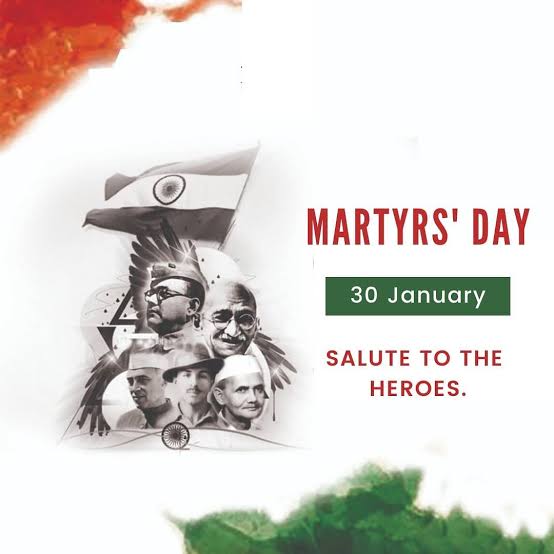
When we hear the word martyr in India, our minds often travel back to the freedom struggle. We think of brave men and women who walked into lathis, bullets, prison cells, and gallows so the nation could breathe in freedom. Their sacrifice is unquestionable, eternal, and deeply respected. But as India moves forward in time, it is worth asking gently and honestly: what does it mean to be a martyr in modern India?
Martyrdom is commonly associated with dying for the nation. But perhaps today, it also includes living for it—often quietly, without applause, medals, or memorials. In a country as large and complex as India, sacrifice does not always arrive wrapped in dramatic moments. Sometimes, it arrives every morning with duty, courage, and commitment.
Our soldiers at the borders continue to protect the nation while the rest of us sleep peacefully. When they lose their lives, the nation rightly mourns them as martyrs. But alongside them stand countless others whose sacrifices remain mostly unseen. A police officer standing firm during unrest. A sanitation worker risking health to keep cities clean during pandemics. A journalist threatened for speaking the truth. A doctor who refuses to abandon patients in the face of danger. These individuals may not always be remembered in textbooks, but their courage keeps the nation standing.
In modern India, martyrdom also lies in choosing honesty in a world that rewards shortcuts, choosing kindness in a climate of anger, and choosing unity when division is easier. It takes quiet bravery to stand for fairness, to speak up for the voiceless, or to refuse hatred even when provoked. Such people may not lose their lives, but they often sacrifice comfort, safety, and peace of mind.
Even ordinary citizens can carry the spirit of a martyr. A teacher shaping minds with integrity instead of chasing numbers. A farmer continuing to work the land despite uncertainty and loss. A social worker fighting exhaustion to bring small changes to forgotten communities. They may never be labelled heroes, yet their lives are acts of service.
When we remember Mahatma Gandhi on Martyrs’ Day, we remember more than the man who was assassinated. We remember the values he lived for—truth, non-violence, courage, and moral strength. Those values are not frozen in history. They are meant to move through time, into our present, into our choices.
Martyrdom today may not always end in death, but it often begins with selflessness. It begins when someone places the nation, humanity, or duty above personal gain. It lives in restraint, responsibility, and resistance against injustice.
As India continues to grow and evolve, perhaps the true tribute to our martyrs is not limited to remembrance ceremonies or solemn silences. It lies in recognising the living sacrifices around us and, more importantly, in asking ourselves a simple question: what are we willing to stand for?
Because in modern India, a martyr is not only someone who died for the nation. A martyr is also someone who lives every day with courage, conscience, and commitment, so that the nation does not lose its soul.
Author’s Note
This piece was written not to redefine martyrdom, but to gently widen its meaning. While we rightly honour those who laid down their lives for the nation, it is equally important to recognise the silent sacrifices that continue every day in modern India. Through this reflection, I hope readers pause, remember, and perhaps look around with a little more gratitude—for courage does not always make headlines, but it sustains the soul of a nation.
Image Courtesy:
If this reflection resonated with you, I’d love to hear your thoughts. Feel free to share them in the comments below—sometimes conversations are the truest tribute.
– Dr Arwa Saifi

About the Writer
Dr. Arwa Saifi is an acclaimed Career Writer with over 18 years of experience in the literary and education space. Honoured with an Honorary Doctorate in Literature, she is also an Amazon #1 Bestselling Author. Her career includes contributions to Education Times, a supplement of The Times of India, where she brought her expertise to one of the country’s leading newspapers.
Dr. Saifi has served as the editor of several prestigious school and college magazines in Mumbai, shaping young voices and nurturing a culture of expression. She is the author of 10 published books and has collaborated as a co-author in more than 40 anthologies. Her work reflects a deep commitment to storytelling, education, and empowering aspiring writers.