I never planned to become a songwriter.
I planned to be a counsellor — and for decades, that is what I was. I sat across from people
carrying weights they could not name, helping them find language for what hurt, helping
them understand that what they felt was not weakness but simply humanness expressing
itself honestly.
And somewhere in all those years of listening — really listening — I noticed something. The
people who healed fastest were not always the ones who talked the most. They were the
ones who found a song. A poem. A melody that said, in three minutes and forty seconds,
exactly what ten therapy sessions had been circling around.
That observation changed me. And eventually, it changed what I do.
The Science Nobody Needed to Prove
Long before researchers put people in brain scanners and measured the neurological impact
of music, human beings already knew. We knew it in lullabies — the instinctive way a parent
hums to a frightened child, not because the child understands the words, but because the
rhythm itself is reassurance. We knew it in folk songs passed across generations, carrying
grief and joy in the same breath. We knew it in the bhajans sung in temples at dawn, in the
qawwalis that rose toward the divine, in the blues that named suffering so precisely it
somehow made suffering more bearable.
Music heals because it speaks to the part of us that words alone cannot reach. Language is
linear — it moves from point to point, explaining and justifying. But music is simultaneous. It
lands everywhere at once — in the chest, the throat, the memory, the body. It bypasses the
arguments we have with ourselves and goes directly to what is true.
What I Discovered Making Songs
When I released my first song, I was in my sixties. People asked me — politely, mostly —
whether it was too late to start.
I told them I wasn’t starting something new. I was continuing something I had been doing
my whole life in a different language.
Counselling and songwriting are the same work. Both require you to listen deeply — to what
is said and to what is not. Both ask you to find the precise word, the exact image, the turn of
phrase that unlocks something in another person. Both exist to make people feel less alone.
The songs I write are not entertainment first. They are connection first. When someone
messages me after hearing one of my songs and says “this is exactly what I felt but couldn’t
say” — that is the healing happening. Not because of anything extraordinary in the music.
But because being understood is itself a form of medicine.
The Songs We Need Most
In my experience as a counsellor, I have noticed that people reach for music at particular
moments — moments of grief, of confusion, of joy too large to contain alone, of longing
with no clear object.
These are the same moments they reach for poetry.
There is a reason for this. In ordinary life, we are surrounded by language that serves
function — instructions, information, requests, responses. But the human heart, from time
to time, needs language that serves no function except truth. Music is that language. It is
the most useless and therefore the most essential thing we make.
I wrote a song called जी लें ज़रा — which translates roughly as “Live a little.” It came from
watching the people around me in my Senior Living community — men and women who
had spent entire lifetimes being responsible, being useful, being what others needed them
to be — who had forgotten, or perhaps never learned, how to simply enjoy being alive.
The song was my counselling session with all of them at once. The music did in three
minutes what a conversation might not have done in three hours.
What Healing Sounds Like?
Healing does not always sound like resolution. Sometimes it sounds like a minor chord that
doesn’t resolve — the musical equivalent of acknowledging that not everything gets fixed,
and that is acceptable. Sometimes it sounds like a chorus that keeps returning — the way
hope returns even when we have stopped expecting it.
The songs that heal are rarely the triumphant ones. They are the honest ones. The ones that
say — I have been here too. In this exact difficult place. And I am still here.
That is all healing really is. Not the absence of pain. The presence of accompaniment.
If I have learned one thing from two careers — one spent listening to people, one spent
writing music for them — it is this:
We do not heal alone. We heal in the company of truth. And music, at its best, is truth set to
a melody that makes it possible to hear.
Start the song. It is never too late.
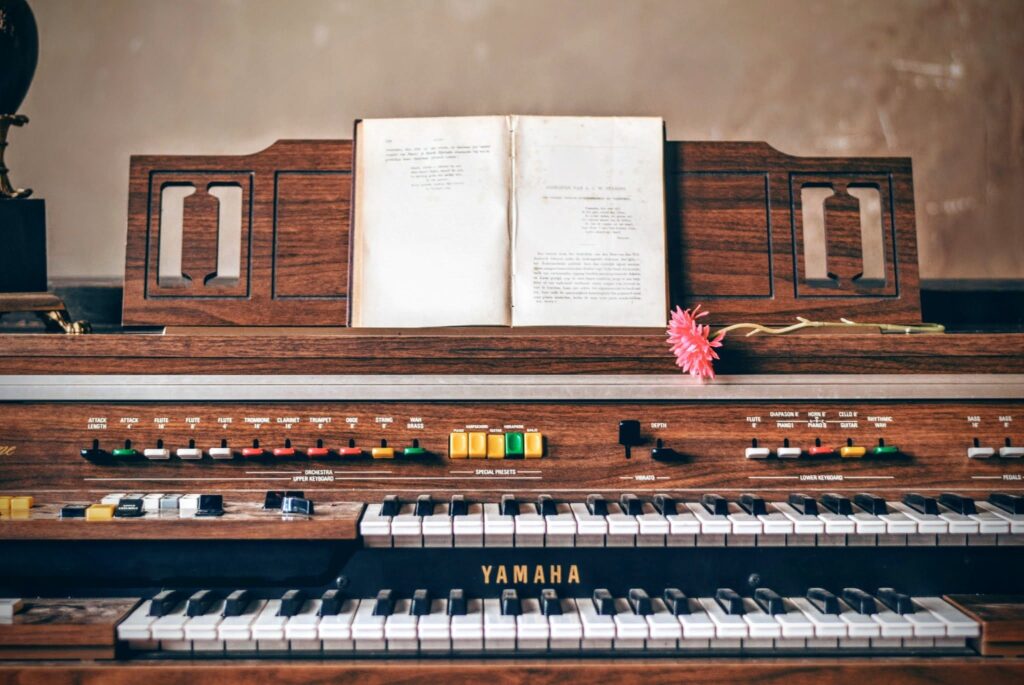
Image Courtesy: https://www.pexels.com/@punttim/
Did this blog resonate with you? Is there a song that has comforted, inspired or healed you during your difficult phase of life? let us know in the comment section
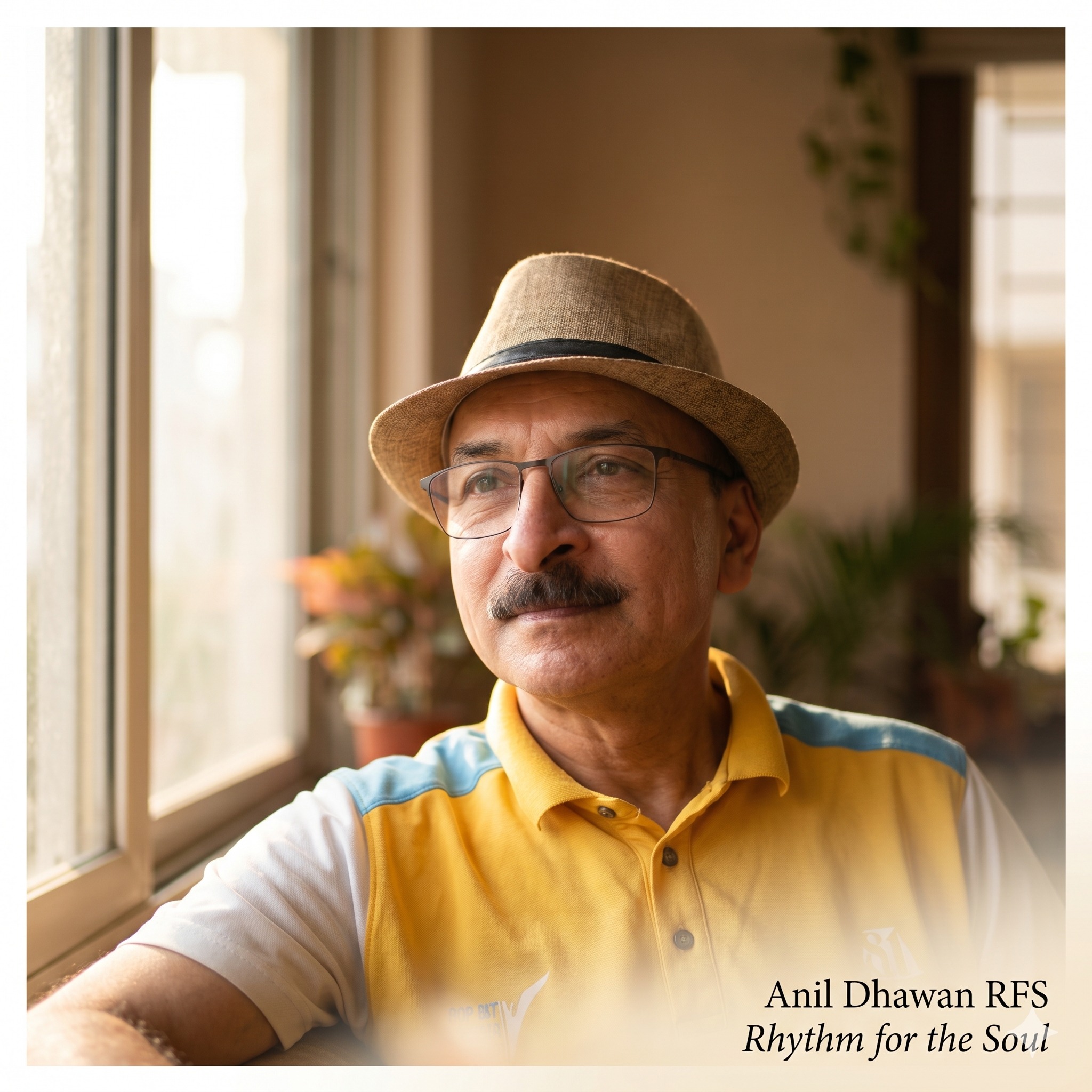
– Anil Dhawan RFS (~ Rhythm for the Soul)
About the Writer:
Anil Dhawan RFS is an acclaimed poet, songwriter, blogger, and life counselor whose multidisciplinary work explores the intricate landscapes of human emotion, mindfulness, and inner transformation. As the visionary creative force behind Rhythm for the Soul (RFS Music), he has cultivated a sprawling digital sanctuary dedicated to the intersection of deep philosophical introspection and sonic artistry. Balancing his work as a counselor with his passion for the written word, he creates thought-provoking compositions designed to offer emotional support and profound existential reflection to a fast-paced modern world. His unique pen name carries a intentional dual significance: representing the inherent musicality of verse capable of healing the human spirit, while also anchoring his abstract poetic reflections into functional, real-world wisdom that readers can apply to navigate everyday psychological challenges.
Throughout his career, he has earned widespread recognition within global literary circles, accumulating a distinguished portfolio of international creative writing honors including multiple Poet of the Day accolades, Top 1 Spotlight distinctions, and Double Platinum honors. His widely discussed concepts—such as “The Art of Enough” and “What Silence Holds”—delve deeply into themes of intentional presence, stripping away societal noise to explore the hidden support systems found within quiet observation. In addition to his extensive catalog of human-authored written poems and micro-blogs, he actively bridges the gap between traditional literature and modern multimedia. By using advanced AI synthesis tools as a production collaborator to score and translate his original verses into fully produced musical arrangements, he blends raw human experience with pioneering digital tools to promote a shared, compassionate humanity across the globe.