
She adjusted the sleeve of her linen kurta before entering the glass building.
Not because she cared how it looked.
Because she knew someone else would.
The lobby smelled of expensive coffee and ambition. Screens flashed startup valuations, leadership quotes, and women empowerment campaigns. Somewhere near the elevators, a digital banner read:
“Diversity Is Our Strength — 2026.”
Naina almost smiled.
Forty-eight years old.
Two decades of experience.
A son in college.
A father with early dementia.
A marriage that survived more silence than conversation.
A body exhausted from hormonal shifts she never had the luxury to understand.
And still, every morning, she entered rooms where people first noticed her lipstick before they noticed her intelligence.
Ahmedabad had changed.
The skyline had changed.
The cafés were modern now.
Women drove luxury cars.
Young founders spoke about inclusion in panel discussions.
People used words like safe space, networking, and progressive culture.
But underneath polished English and corporate lighting, old questions still sat comfortably in people’s minds.
“She dresses too well for her age.”
“She’s very friendly with male colleagues.”
“She’s too comfortable around men.”
“Doesn’t she have a family?”
“Why is she always laughing with them?”
Naina heard these sentences the way one hears traffic in a metro city: constant, irritating, unavoidable.
Nobody asked whether she was carrying anxiety so heavy she had forgotten what deep sleep felt like.
Nobody asked why she stayed late at the office instead of rushing home.
Nobody knew that home had become a place where conversations existed only around medicines, bills, and responsibilities.
Nobody noticed that work was the only place she still felt visible.
But visibility for women like her came with conditions.
If she was quiet, she was arrogant.
If she was confident, she was intimidating.
If she looked tired, she had “let herself go.”
If she looked good, she was “trying too hard.”
If she spoke warmly with men, there had to be a reason beyond professionalism.
One afternoon, during a leadership review meeting, she presented a strategy that shifted the room completely. Numbers improved. Risks reduced. Even the CEO nodded.
Yet after the meeting, in the cafeteria, two younger employees whispered loudly enough for her to hear.
“She definitely knows how to maintain equations with senior men.”
The other one laughed.
Naina stood there holding her tea.
For one second, she felt nineteen again.
Judged.
Reduced.
Explained through men.
Not through merit.
She wanted to turn around and ask them:
Do you know how lonely it is to rebuild yourself at forty-eight?
Do you know what it takes for a woman to still walk into rooms confidently after life has broken her ten different ways?
Do you know how much strength it takes to remain kind when the world keeps questioning your character for simply existing freely?
But she said nothing.
Because women her age had mastered the art of swallowing humiliation without disturbing the room.
That evening, rain covered the city in silver reflections. The metro line cut through the glowing roads. Billboards advertised luxury apartments, international schools, AI companies, and modern India.
Naina sat in her car watching people rush home.
She thought about how cities evolve faster than mindsets.
The buildings become glass.
The language becomes polished.
The sexism becomes softer.
But it survives.
Now it hides inside concern.
Inside jokes.
Inside “respectable” conversations.
Inside the way people monitor women who refuse to shrink with age.
Her phone buzzed.
A message from her son:
“Ma, presentation went well?”
She smiled.
“Yes,” she typed. “Very well.”
Then, after a pause, she added:
“And today I realized something.”
“What?”
“That women like me are not difficult for society because we are wrong.”
“We are difficult because we survived.”
Outside, the city kept moving, ambitious, modern, expanding.
And somewhere inside that fast-growing metro of 2026, a forty-eight-year-old woman finally stopped apologizing for taking up space.
Author’s Note
Glass Buildings, Old Mindsets emerged from observations, conversations, and experiences that many women quietly carry through their personal and professional lives. While our cities continue to modernize and workplaces proudly speak the language of inclusion, subtle judgments about women often remain deeply rooted beneath the surface.
Through Naina’s story, this piece explores the invisible emotional labor, resilience, and quiet courage of women who continue to navigate expectations, stereotypes, and scrutiny while simply trying to live authentically.
Image Courtesy:https://www.pexels.com/@mart-production/
If this story resonated with you, share your thoughts in the comments below. Have our cities evolved faster than our mindsets?
– Neha Mulay
About the Author
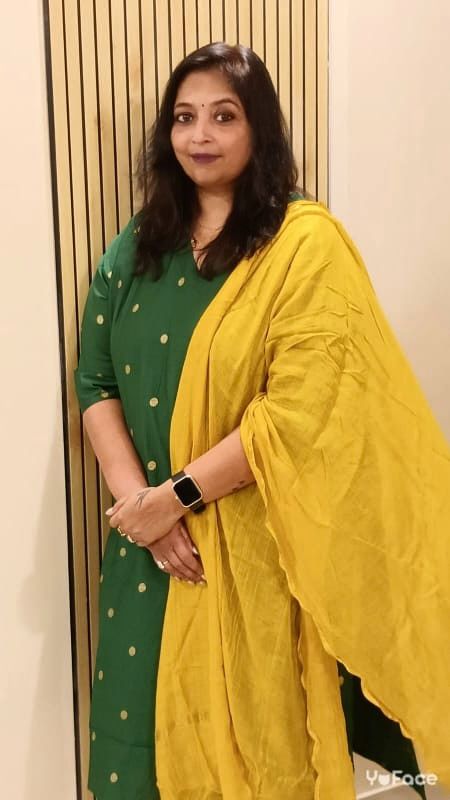
Neha Mulay is an Ahmedabad-based educator, author, and Early Childhood Care and Education professional with over two decades of experience. Throughout her career, she has worked closely with children, parents, educators, and schools, taking on diverse roles as an educator, curriculum designer, mentor, and parent educator.
Her work is rooted in a deep interest in understanding children, human behaviour, relationships, and the experiences that shape individuals across different stages of life.
Writing is a natural extension of this journey. Through her stories and reflections, Neha explores themes such as parenting, personal growth, relationships, social issues, and life’s unexpected lessons. She believes that stories have the power to spark meaningful conversations, build connections, and encourage greater empathy and understanding.
When she is not writing, she continues to create meaningful learning experiences that support children’s development and empower the adults who guide them.