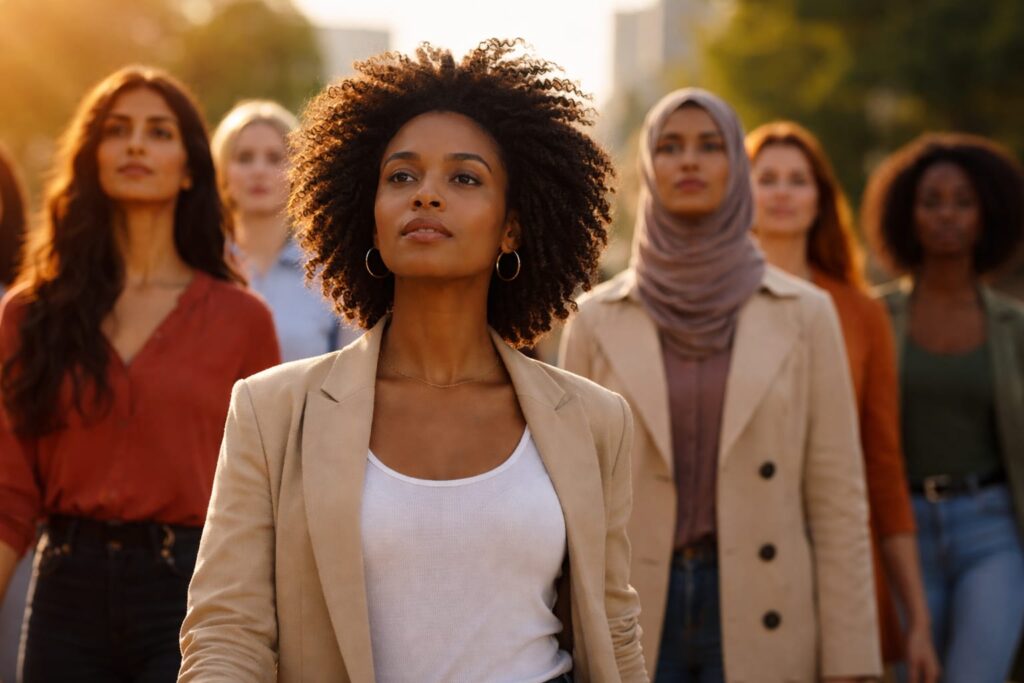
There was a time when power wore a particular face. It was loud, commanding, and often male. It stood tall in boardrooms, echoed in political halls, and rarely paused to listen. For centuries, women were told that power was something they might borrow, but rarely own. It was conditional. It came with expectations. It required approval.
A woman could be powerful, they said, but only if she was agreeable. Ambitious, but not intimidating. Vocal, but not disruptive. Intelligent, but not threatening. Capable, but grateful for the opportunity.
Somewhere between those conditions, women began to shrink.
Not because they lacked strength, but because they were trained to ask before stepping forward: “Is this acceptable?” “Am I allowed?” “Will this upset someone?” Generations of women perfected the art of seeking permission—permission to study further, permission to work after marriage, permission to return to work after motherhood, permission to speak openly about injustice, permission to choose themselves.
And yet, something has been quietly transforming.
Power is being redefined—not through aggression, but through awareness. Not through domination, but through self-possession. Not through permission, but through choice.
To move beyond permission is not an act of rebellion for the sake of rebellion. It is an act of reclamation. It is recognizing that worth does not need to be stamped, certified, or applauded to be real.
When a young woman chooses a career in engineering despite being told it is “not for girls,” she is redefining power. When a mother returns to education after dedicating years to her family, she is redefining power. When a woman leaves a relationship that no longer respects her dignity, she is redefining power. When another chooses to stay and rebuild with clear boundaries, she too is redefining power.
Because power is not singular. It is personal.
For too long, power was measured by titles and positions. But women are expanding its meaning. Power can look like emotional intelligence. It can look like raising emotionally secure children in a chaotic world. It can look like starting a small business from a single desk at home. It can look like writing stories that challenge silence. It can look like choosing rest in a culture that glorifies exhaustion.
There is a quiet courage in no longer asking society whether you are “too much” or “not enough.” That courage does not always shout. Sometimes it whispers, “This is who I am.” And that whisper changes everything.
Women beyond permission understand that waiting for validation often means postponing potential. How many dreams were delayed because someone was waiting for approval? How many talents were hidden because society declared them inconvenient? How many voices were softened to make others comfortable?
The shift we are witnessing today is not simply about equality in numbers. It is about equality in narrative. Women are no longer content with being footnotes in their own stories. They are authors now. They are rewriting what leadership looks like. It does not need to be harsh to be effective. They are proving that empathy is not weakness. That collaboration is not submission. That resilience does not always roar—sometimes it endures quietly and still transforms everything it touches.
Moving beyond permission also demands confronting internal barriers. Sometimes the loudest restrictions are not external but inherited—beliefs carried from childhood, from culture, from repeated societal messaging: “Be polite.” “Do not argue.” “Compromise.” “Sacrifice.” These values are not wrong in themselves, but when they silence ambition or diminish self-worth, they need to be examined.
Redefining power means asking difficult questions: Why should a woman apologize for being ambitious? Why is assertiveness in a man admired and in a woman criticized? Why does confidence in a woman often feel like defiance to those uncomfortable with change?
When women stop shrinking to fit expectations, space expands—not just for themselves, but for others. A girl watching her mother negotiate her salary learns confidence. A student seeing her teacher lead with authority learns possibility. A daughter witnessing her grandmother speak truths long suppressed learns courage.
Progress rarely arrives in dramatic gestures. It is present in everyday choices. It is in the decision to continue studying despite judgment. It is in starting a conversation others avoid. It is in setting boundaries without apology. It is in allowing oneself to dream without first seeking endorsement.
Power beyond permission is deeply rooted in self-trust. It is knowing that even if the world hesitates, you will not hesitate with yourself. It is understanding that discomfort from others does not necessarily mean you are wrong. It often means you are different from what they are used to. And the difference is powerful.
This new understanding of power does not aim to replace one dominance with another. It aims to balance, to evolve, to create room. It recognizes that empowerment is not about overpowering but about standing firmly in one’s identity.
Women have always possessed strength. History simply did not always record it loudly. It lived in quiet sacrifices, in communities sustained, in families nurtured through adversity, in innovations created behind closed doors, in movements started with nothing but conviction. Today, those strengths are stepping into visibility.
To be a woman beyond permission is to know that you do not need to be invited to your own future. It is to trust that your presence in any room is earned not by approval, but by ability. It is to allow yourself to take up space without explanation. It is not selfish. It is self-respect.
The journey is not always smooth. Resistance exists. Criticism exists. Systems are slow to change. But change is persistent. Each woman who refuses to dim her light makes it easier for another to shine. Each voice that speaks without trembling clears a path for voices still learning to steady themselves.
Redefining power is not about having everything figured out. It is about having the courage to move forward even when you do not. And perhaps that is the most transformative aspect of all.
When women stop seeking permission to exist fully—to love deeply, to lead confidently, to speak honestly, to dream boldly—they shift the culture itself. They show younger generations that power is not a favor granted by society. It is an inner knowing.
Power is choosing yourself without guilt.
Power is speaking even when your voice quivers.
Power is rebuilding when you are broken.
Power is defining success on your own terms.
Women beyond permission are not waiting for a world that may never perfectly approve. They are building one that reflects their truth. And in doing so, they are not merely redefining power—they are reclaiming it.
If you liked this blog, leave your thoughts and reflections below—I would love to hear how it inspired you!
– Dr. Arwa Saifi

About the Writer
Dr. Arwa Saifi is an acclaimed Career Writer with over 18 years of experience in the literary and education space. Honoured with an Honorary Doctorate in Literature, she is also an Amazon #1 Bestselling Author. Her career includes contributions to Education Times, a supplement of The Times of India, where she brought her expertise to one of the country’s leading newspapers.
Dr. Saifi has served as the editor of several prestigious school and college magazines in Mumbai, shaping young voices and nurturing a culture of expression. She is the author of 10 published books and has collaborated as a co-author in more than 40 anthologies. Her work reflects a deep commitment to storytelling, education, and empowering aspiring writers.