
The Photograph That Said Everything
There is a photograph on my phone—not a framed one, just a casual click—of my family sitting together at dinner. Nobody is looking at the camera. Half of them are looking at their phones.
I did not delete that photograph. I kept it as a reminder.
A reminder that love does not disappear in changing times, but it does need to be more deliberate.
The Family I Grew Up In
When I was growing up, family was not a concept you discussed—it was simply the air you breathed. The door was always open. Neighbors walked in unannounced. Cousins arrived for summers and stayed for months. Nobody asked, “Are you free this weekend?” You were simply there, together, by default.
Meals were not scheduled. They happened because everyone was home. Conversations were not planned. They happened because there was no screen to retreat into.
The family bond in those days was built on proximity. You were together, so you connected. Connection was not something you had to create—it existed naturally in the shared space of living.
What Changed
I have spent over two decades as a counselor, and I can tell you with certainty: the single most consistent theme across thousands of conversations is that people feel alone inside their families.
Not lonely in the world. Alone inside their homes.
A teenager sits three feet from her mother and cannot remember the last real conversation they had. A husband and wife share a bed and separate lives. A father works himself to exhaustion, providing for children who would trade half his salary for one hour of his undivided attention.
This is not a failure of love. It is a failure of time and presence.
The world changed faster than our emotional habits could adapt. Technology arrived and we welcomed it—reasonably so—but we forgot to set boundaries around the one thing that needed protecting most: our attention.
Because attention is love made visible. And when attention goes elsewhere, love becomes invisible—even when it is still very much present.
The Silent Epidemic
In my work as a counselor, I began noticing a pattern that troubled me deeply. Families were functioning perfectly—bills paid, children educated, vacations taken, photographs uploaded—and yet something essential was missing.
Rituals.
The small, ordinary rituals that stitch people together: eating together, talking about the day—not the highlights, but the small details, sitting in the same room without purpose, watching something silly together and laughing at the same moment.
These rituals seem trivial. They are not. They are the invisible architecture of belonging. When they disappear, family members begin to feel like polite strangers sharing a postcode.
I have sat with grown adults—successful, accomplished people—who weep when they realize they cannot remember the last time they felt truly known by the people closest to them.
What Holds
And yet—here is what I have also seen, and what gives me hope:
Families are resilient in ways that often surprise us.
I have seen estranged siblings reconnect after decades over a parent’s illness. I have seen marriages find their second wind after years of distance. I have seen parents and children rediscover each other when one of them finally says—simply—“I miss you.”
The bond does not break easily. It bends. It stretches. It goes quiet for years. But it does not easily break—because it was forged in something deeper than proximity or convenience. It was forged in shared history, shared blood, shared memory.
The smell of your mother’s cooking. The sound of your father’s laugh. The specific way your sibling says your name when something is wrong. These things live in the body, not just the mind. And they are not easily erased.
What We Must Choose
Here is the counselor in me speaking directly:
Family bonds in changing times do not maintain themselves. They require choice.
The choice to put the phone down at dinner—not occasionally, but consistently. The choice to ask, “How are you really?” and to wait long enough for a real answer. The choice to be present in body and mind, not just under the same roof.
The choice to create new rituals suited to the life you are actually living—not the one your grandparents lived. Maybe it is a weekly movie night. Maybe it is a morning walk. Maybe it is a group chat where you share only good news.
The form matters less than the intention behind it.
A Final Thought
I believe that deep down, every human being wants the same thing from their family: to be seen. Not evaluated, not managed, not provided for—but truly seen.
In a world that is changing faster than we can process, the family that survives and thrives will be the one that makes seeing each other a daily practice.
Not on holidays. Not on birthdays. Every ordinary, unremarkable, sacred day.
That is where family lives. That is where it has always lived.
“The greatest gift we can give our families in changing times is not a bigger house or a better phone. It is our undivided presence—even for twenty minutes a day. Twenty minutes of genuine attention, genuine curiosity, genuine listening. That is not much to ask. And yet it changes everything.”
Image Courtesy:https://www.pexels.com/@gustavo-fring/
If this reflection resonates with you, share your thoughts below—because every family story deserves to be heard.
– Anil Dhawan RFS (~ Rhythm for the Soul)
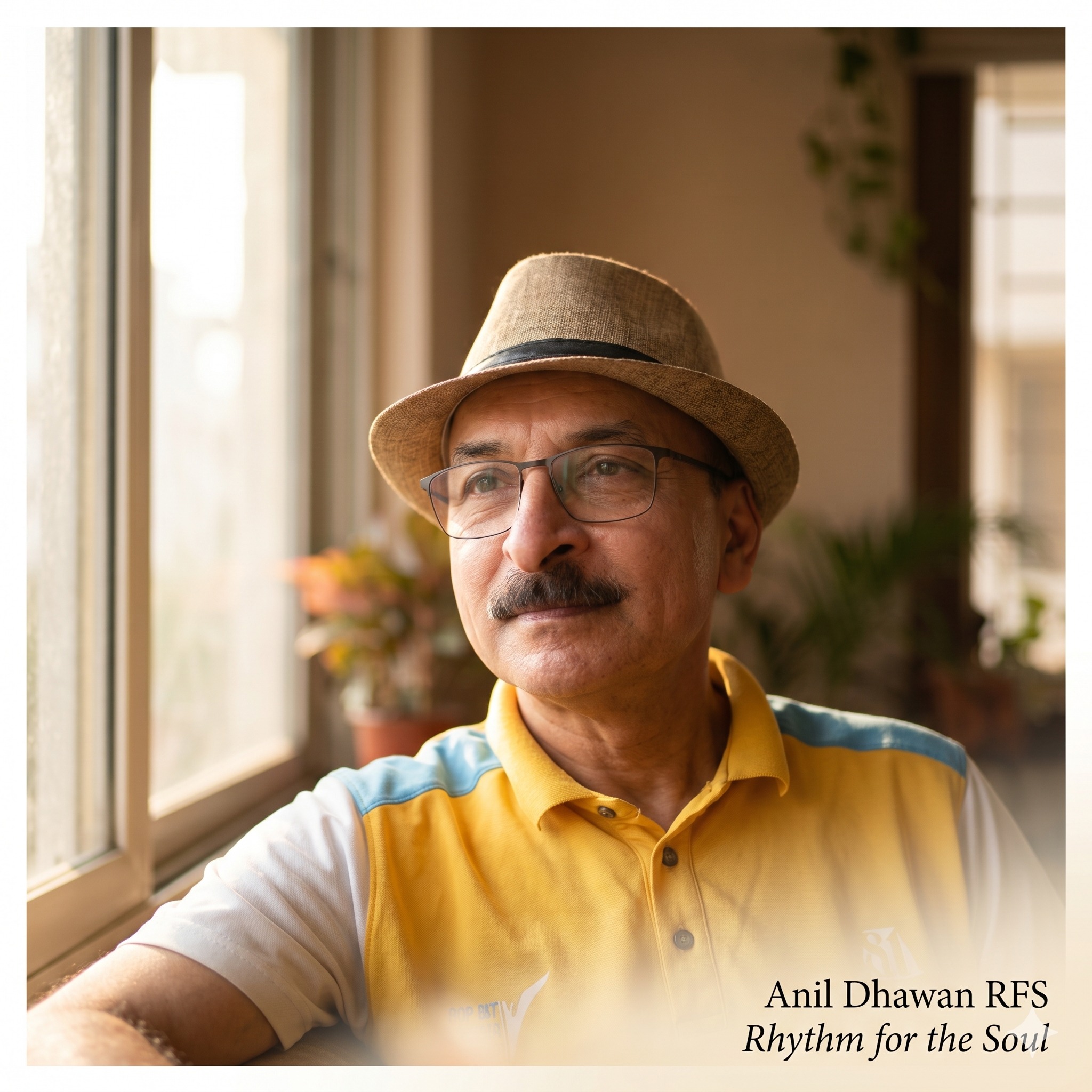
About the Writer:
Anil Dhawan RFS is an acclaimed poet, songwriter, blogger, and life counselor whose multidisciplinary work explores the intricate landscapes of human emotion, mindfulness, and inner transformation. As the visionary creative force behind Rhythm for the Soul (RFS Music), he has cultivated a sprawling digital sanctuary dedicated to the intersection of deep philosophical introspection and sonic artistry. Balancing his work as a counselor with his passion for the written word, he creates thought-provoking compositions designed to offer emotional support and profound existential reflection to a fast-paced modern world. His unique pen name carries a intentional dual significance: representing the inherent musicality of verse capable of healing the human spirit, while also anchoring his abstract poetic reflections into functional, real-world wisdom that readers can apply to navigate everyday psychological challenges.
Throughout his career, he has earned widespread recognition within global literary circles, accumulating a distinguished portfolio of international creative writing honors including multiple Poet of the Day accolades, Top 1 Spotlight distinctions, and Double Platinum honors. His widely discussed concepts—such as “The Art of Enough” and “What Silence Holds”—delve deeply into themes of intentional presence, stripping away societal noise to explore the hidden support systems found within quiet observation. In addition to his extensive catalog of human-authored written poems and micro-blogs, he actively bridges the gap between traditional literature and modern multimedia. By using advanced AI synthesis tools as a production collaborator to score and translate his original verses into fully produced musical arrangements, he blends raw human experience with pioneering digital tools to promote a shared, compassionate humanity across the globe.