
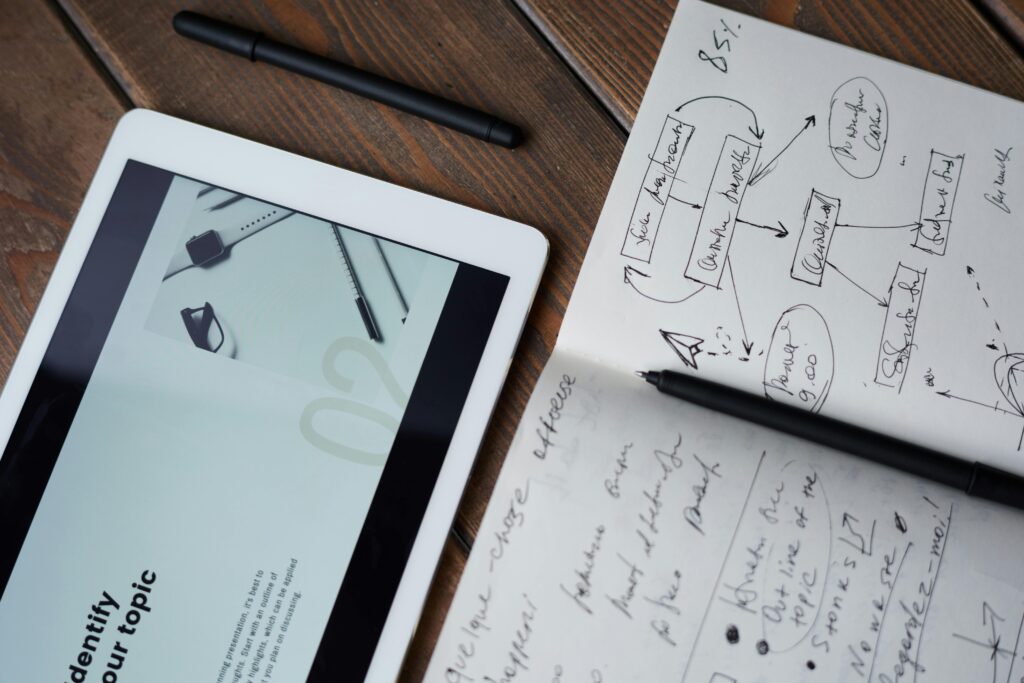
We live in a time where speed is celebrated. Messages are typed in seconds, notes are stored in apps, and reminders pop up before we even have to remember them. Somewhere along the way, the simple act of writing by hand has quietly stepped into the background. Yet, whenever the mind feels overwhelmed or information refuses to stick, it is often a pen that rescues us.
Think about a classroom. One student types furiously, trying to catch every word the teacher says. Another writes slowly, occasionally missing a sentence, but pausing to think, underline, or scribble a small note in the margin. Months later, during exams, it is the second student who recalls concepts with surprising clarity. The reason is simple: writing by hand forces the brain to engage. It listens, processes, and decides what is important instead of copying blindly.
The same happens in everyday adult life. Many of us attend meetings and type detailed notes, only to forget them later. Open that document after a week, and it feels unfamiliar, almost empty of meaning. Compare that with a handwritten page—arrows linking thoughts, words underlined twice, a sudden idea squeezed into the corner. Reading it brings the entire moment back: the discussion, the mood, the importance of that one key point.
Writing by hand works because it slows us down. The brain must think about each word, guide the hand, recognize shapes, and organize information at the same time. This combination activates multiple areas of the brain, creating stronger and more lasting memory connections. Typing, though efficient, repeats the same movements over and over. The fingers move, but the mind often remains on autopilot.
Children offer another everyday example. A child who practices writing spellings by hand remembers words more easily than one who only types them. Journal writers often say that emotions feel clearer on paper than on a screen. Even something as ordinary as a shopping list behaves differently. A handwritten list is often remembered without checking, while a digital list disappears the moment the phone is out of reach.
None of this means technology is the enemy. Typing has its place—for speed, convenience, and organization. But when learning, remembering, or reflecting truly matters, handwriting quietly proves its value. Even five minutes of writing by hand each day can sharpen focus and strengthen memory. A short summary after reading, a few lines at the end of the day, or quick notes while planning can make a remarkable difference.
In a fast-moving digital world, handwriting feels like a pause button. It gives the brain time to absorb, connect, and understand. Sometimes, slowing down is not a step backward, but the most sensible way forward.
Author’s Note:
This piece is written as a gentle reminder in an age of constant tapping and scrolling. As writers, learners, and thinkers, we often search for complex solutions, forgetting that some of the most powerful tools already lie within reach. A pen, a page, and a few quiet moments can do more for the mind than we often realize.
Image Courtesy: https://www.pexels.com/@fauxels/
– Dr. Arwa Saifi

About the Writer
Dr. Arwa Saifi is an acclaimed Career Writer with over 18 years of experience in the literary and education space. Honoured with an Honorary Doctorate in Literature, she is also an Amazon #1 Bestselling Author. Her career includes contributions to Education Times, a supplement of The Times of India, where she brought her expertise to one of the country’s leading newspapers.
Dr. Saifi has served as the editor of several prestigious school and college magazines in Mumbai, shaping young voices and nurturing a culture of expression. She is the author of 10 published books and has collaborated as a co-author in more than 40 anthologies. Her work reflects a deep commitment to storytelling, education, and empowering aspiring writers.


I so agree with this. Writing is pause, peace, memory and for us all it’s nostalgia. Loved it
🩷🙏