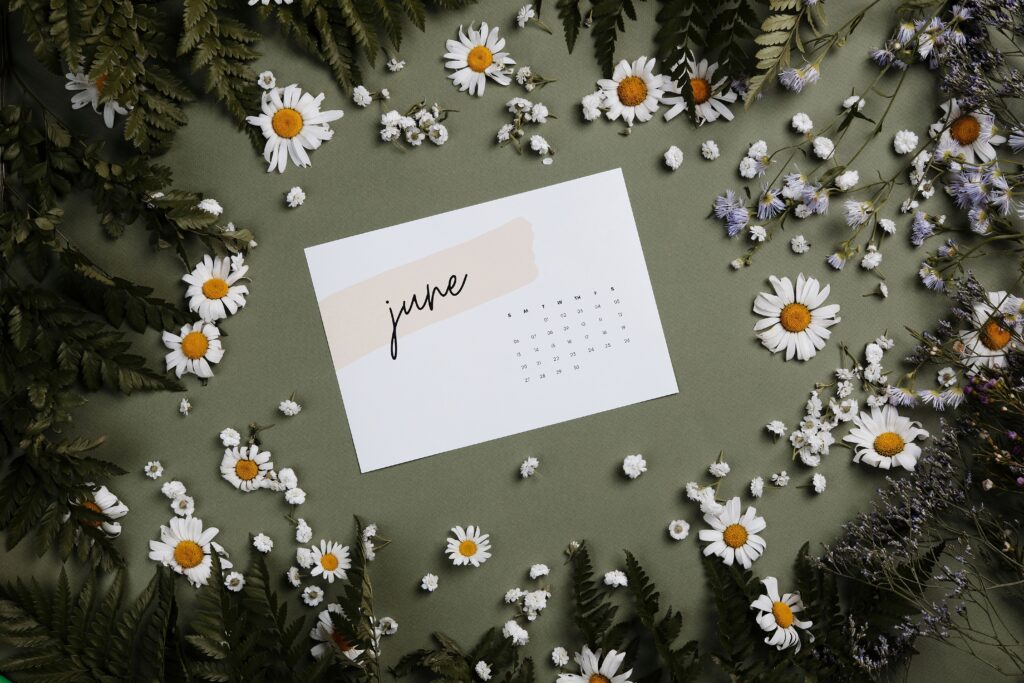
We are halfway through the year.
Pause for a moment and let that land.
Six months have passed since you stood at the beginning of January with whatever you
were carrying — hope, resolution, exhaustion, grief, or simply the quiet wish that this year
might be different from the last. Half of that year is now behind you. The other half is still
open, still unwritten, still full of the kind of possibility that only the future can hold.
I want to talk about what this moment means. Not the productivity version of it — not the
version that asks how many goals you achieved or how far you progressed on some
numbered list. I want to talk about the human version of it. The version that asks a simpler,
more honest question:
Who are you now, compared to who you were then?
The Myth of the Linear Year
We are taught to think of a year as a straight line. January at one end, December at the
other, progress moving steadily from left to right like a graph that always trends upward.
This is a beautiful idea. It is also completely false.
A year, in lived experience, is nothing like a straight line. It is a landscape — sometimes flat
and traversable, sometimes steep and exhausting, sometimes surprisingly gentle when you
expected difficulty. There are months that expand and months that collapse. There are
weeks that feel like years and years that feel like weeks. There are seasons of extraordinary
productivity followed by seasons of apparent stillness that are, in fact, doing the most
important work of all — integration, rest, the slow composting of experience into wisdom.
The half year reflection is not about measuring how far you have come along a straight line.
It is about understanding the landscape you have been moving through.
What My Own Six Months Held
I am not exempt from this reflection. I am in it with you.
In six months I have released songs into the world — music that began as feelings I could
not otherwise articulate, and became, through the alchemy of melody and lyric, something
other people could hold and call their own. I have written poems. I have sat with people in
pain and in joy and in the complicated territory between the two. I have learned things I did
not expect to learn and unlearned a few things I thought I already knew.
I have also had mornings where nothing moved. Days where the page stayed blank. Hours
where doubt was louder than confidence.
I include this not to seem humble but because it is true, and because I believe strongly that
a half year reflection which only celebrates achievements is not a reflection at all. It is a
performance. True reflection requires honesty about the whole picture — what grew, what
didn’t, what surprised you, what disappointed you, and what you are still figuring out.
The Questions Worth Asking
As a counsellor, I have learned that the quality of an answer depends entirely on the quality
of the question. Here are the questions I find most useful at the halfway point of any year:
What did I say yes to that I should have said no to — and what did I say no to that deserved
a yes?
Where did I grow in ways I didn’t plan or expect?
What am I still carrying from January that no longer serves me?
Who showed up for me — and for whom did I show up?
What have I been postponing, and why?
If I could write a letter to myself in January, what would it say?
These questions do not have neat answers. That is precisely their value. A question that can
be answered in a sentence is usually a question that was not worth asking.
The Gift of the Second Half
Here is what I know about the second half of a year that the first half cannot teach you:
You already know more than you did in January.
You know which of your resolutions were wishful thinking and which were real
commitments. You know which relationships nourish you and which exhaust you. You know,
with six months of evidence, something important about who you actually are — as distinct
from who you planned to be when the year was still hypothetical.
This is not failure. This is data. And data, used wisely, is the most powerful fuel for the
second half of any year.
The second half of the year does not require you to be a different person. It simply asks you
to be a more informed version of the same one.
Begin again. You are better equipped now than you were in January.
And that is enough to start.
Image Courtesy: https://www.pexels.com/@boris-pavlikovsky/
The year is halfway over- but your story is still being written. Read this blog and discover what the first half has taught us all.
– Anil Dhawan RFS (~ Rhythm for the Soul)
About the Writer:
Anil Dhawan RFS is an acclaimed poet, songwriter, blogger, and life counselor whose multidisciplinary work explores the intricate landscapes of human emotion, mindfulness, and inner transformation. As the visionary creative force behind Rhythm for the Soul (RFS Music), he has cultivated a sprawling digital sanctuary dedicated to the intersection of deep philosophical introspection and sonic artistry. Balancing his work as a counselor with his passion for the written word, he creates thought-provoking compositions designed to offer emotional support and profound existential reflection to a fast-paced modern world. His unique pen name carries a intentional dual significance: representing the inherent musicality of verse capable of healing the human spirit, while also anchoring his abstract poetic reflections into functional, real-world wisdom that readers can apply to navigate everyday psychological challenges.
Throughout his career, he has earned widespread recognition within global literary circles, accumulating a distinguished portfolio of international creative writing honors including multiple Poet of the Day accolades, Top 1 Spotlight distinctions, and Double Platinum honors. His widely discussed concepts—such as “The Art of Enough” and “What Silence Holds”—delve deeply into themes of intentional presence, stripping away societal noise to explore the hidden support systems found within quiet observation. In addition to his extensive catalog of human-authored written poems and micro-blogs, he actively bridges the gap between traditional literature and modern multimedia. By using advanced AI synthesis tools as a production collaborator to score and translate his original verses into fully produced musical arrangements, he blends raw human experience with pioneering digital tools to promote a shared, compassionate humanity across the globe.